Florence: From Michelangelo’s David to Wine Windows Secrets
See Florence through art, stories, and taste. Admire Michelangelo’s David with guaranteed entry, then stroll through hidden streets and wine windows for an authentic local evening.
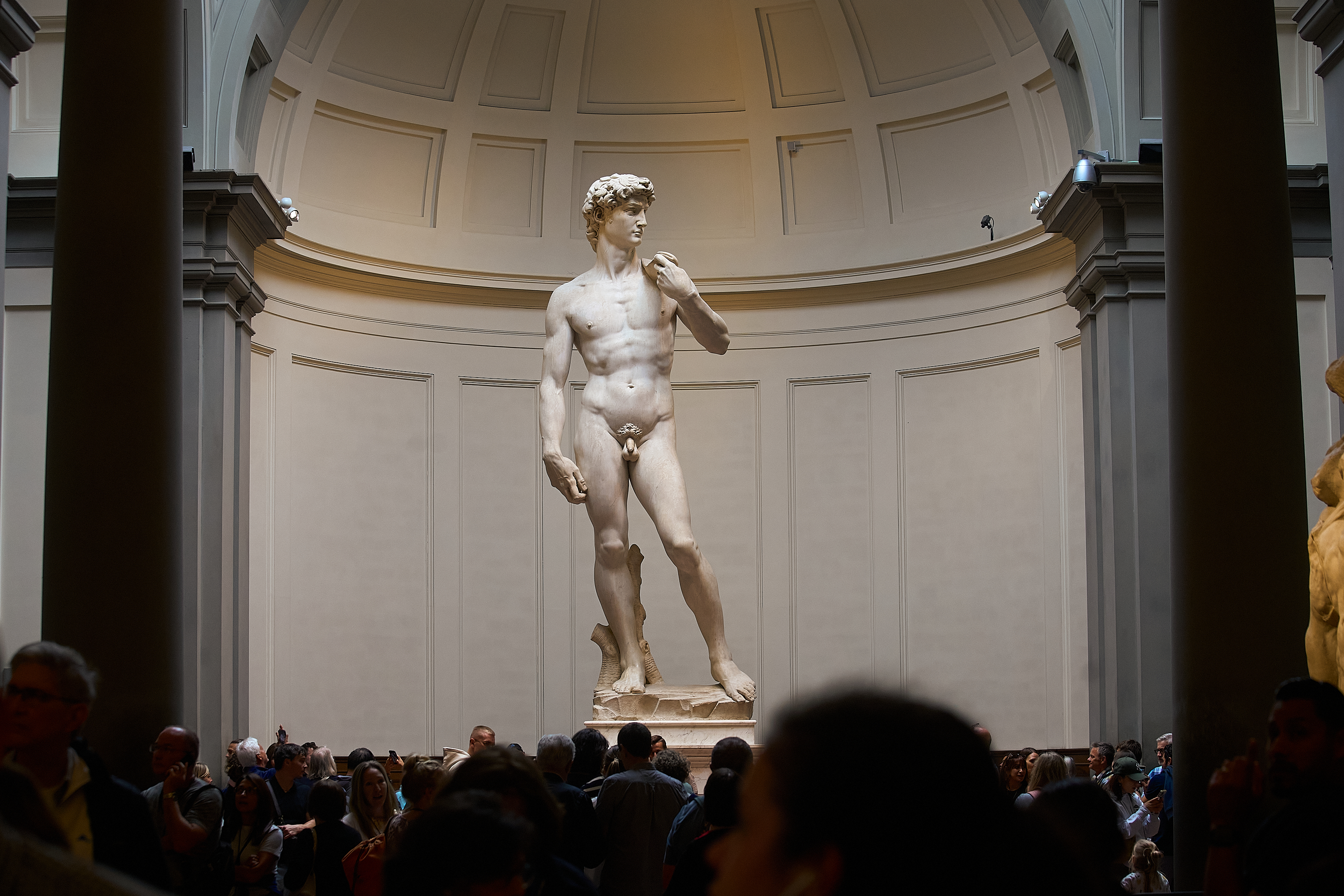
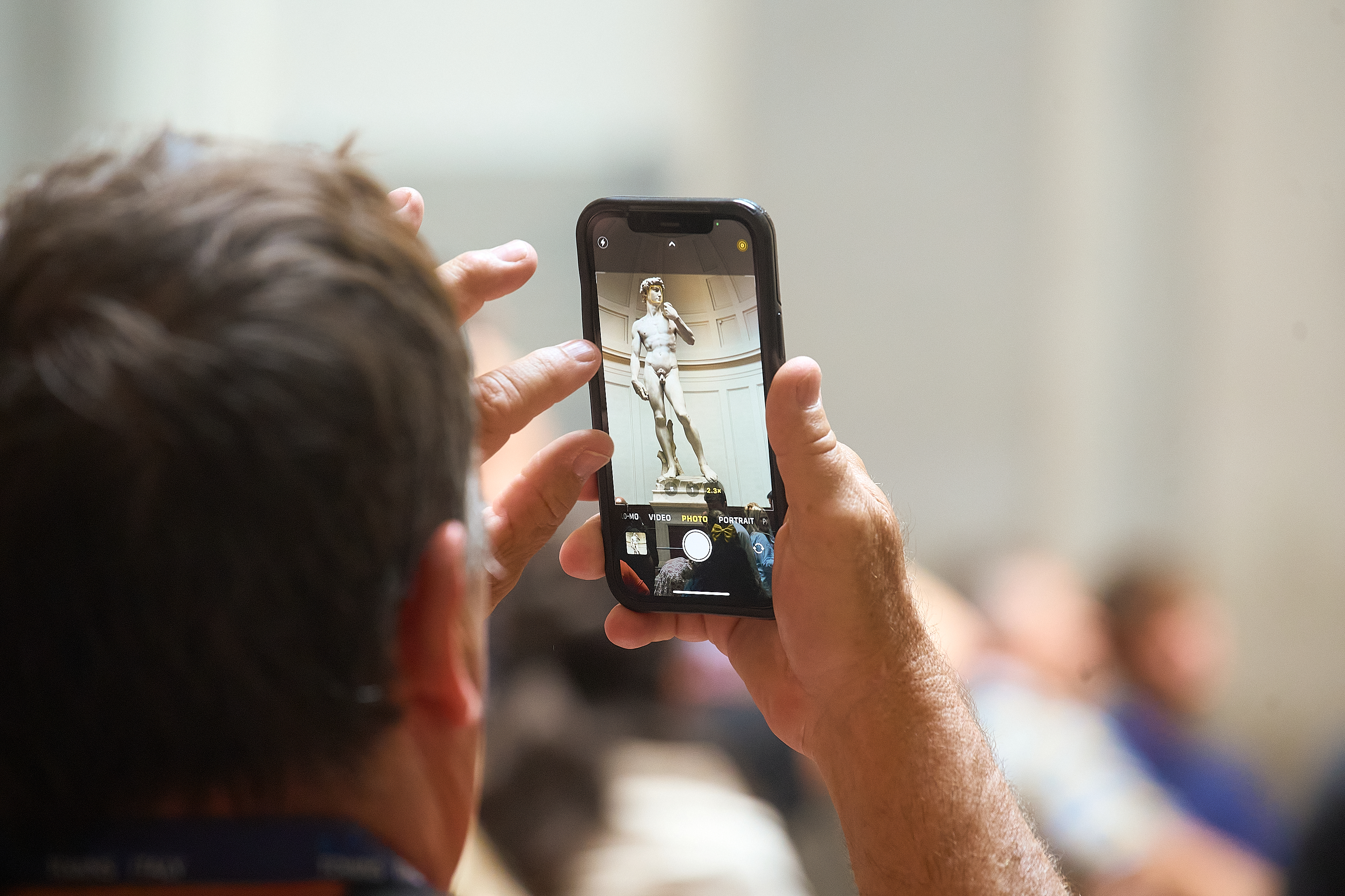
- Guaranteed entry tickets to the Accademia Gallery and Michelangelo’s David
- Admire masterpieces by Botticelli, Uccello, and Andrea del Sarto
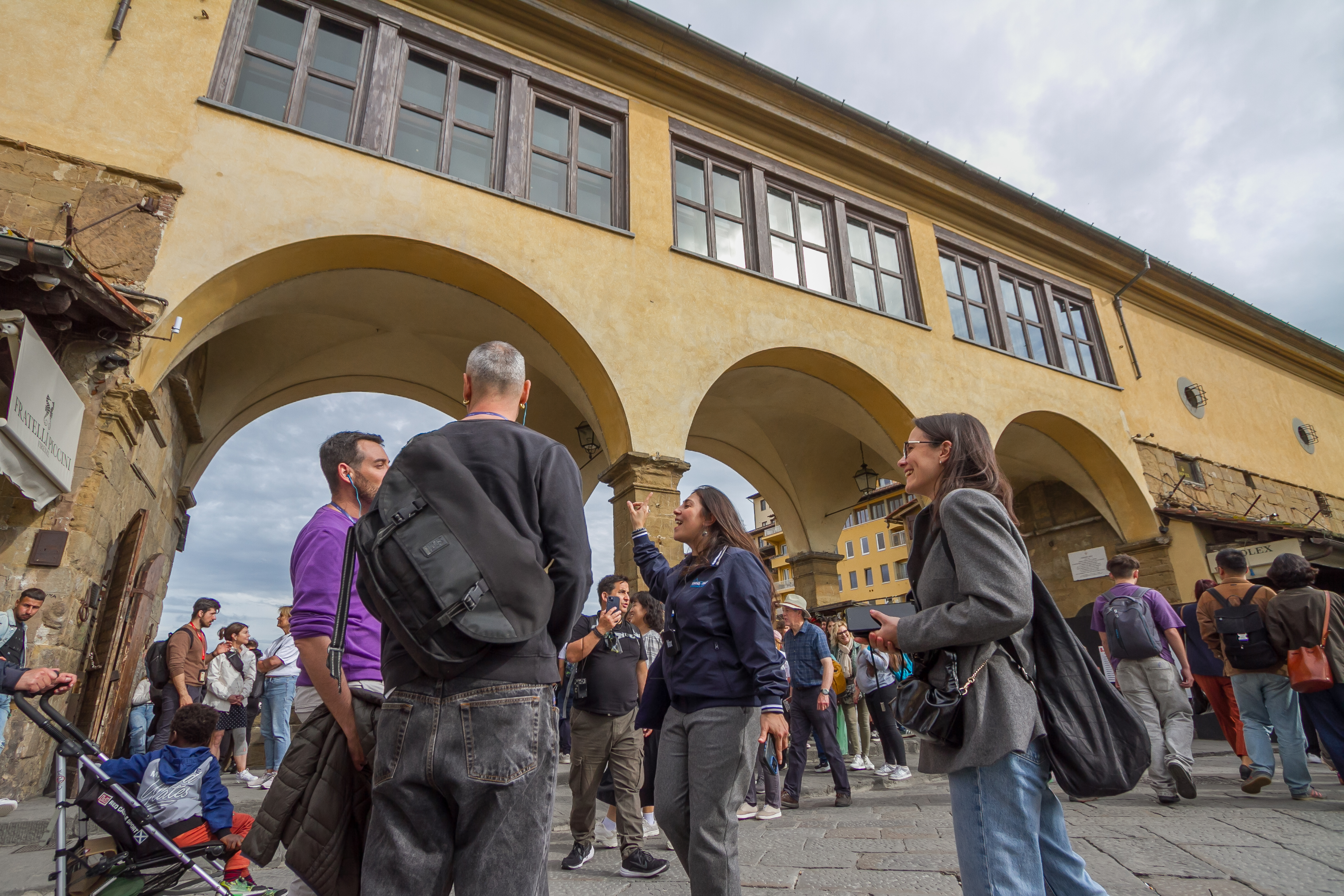
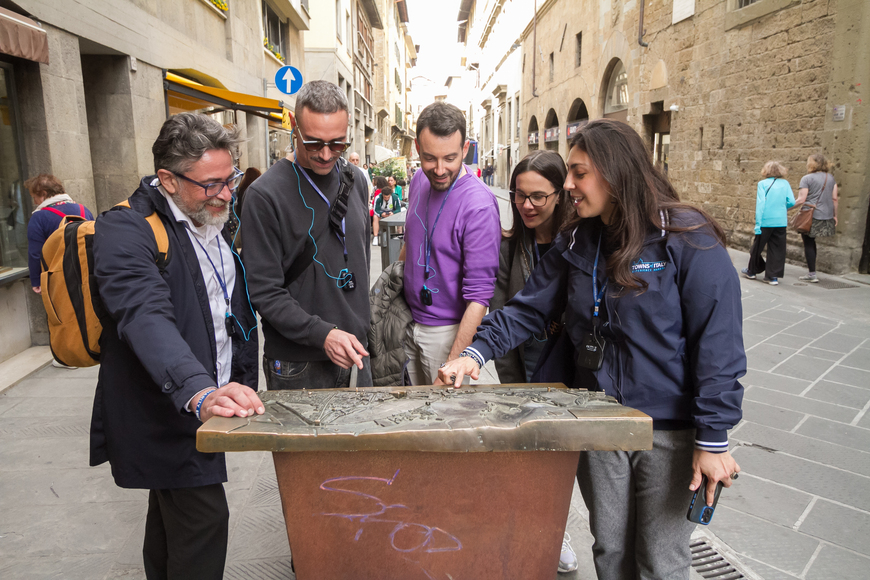
- Evening walking tour through Florence’s hidden streets and artisan Oltrarno
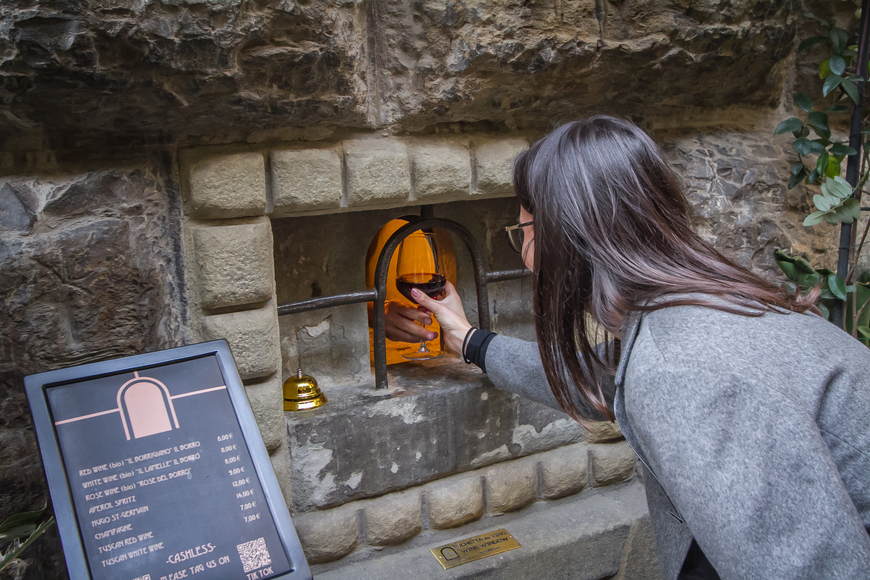
- Taste local delicacies and sip wine served through historic buchette del vino
- Hear Medici stories and local legends from your expert guide
Meeting Point
This is a combo tour with two different meeting points.
Accademia Ticket Office Via Ricasoli, 58/60, Florence. Look for the Towns of Italy tour guide in front of civic number 58.
Florence - Via de Lamberti 1. Look for Towns of Italy tour guide, in front of civic number 1.
What does Michelangelo's David represent and symbolize?
On one level, Michelangelo's David represents the biblical hero who defeated the giant Goliath, a story of intelligence, courage, and faith triumphing over brute strength. But when it was placed in Piazza della Signoria in 1504, David took on a much more specific civic meaning: he became the symbol of the Florentine Republic, which had just expelled the Medici dynasty and was reasserting its independence against powerful neighboring states (including the Papacy and the duchy of Milan). David embodied the Florentine ideals of republican virtue and defiant courage. His disproportionately large hands and head, visible when the statue is seen from below, as it was originally intended, were a deliberate artistic choice by Michelangelo to emphasize his power and determination when viewed at plaza level. Today, David is the symbol of Florence itself.
How do Florence's wine windows work, and can you still use them today?
Florence's historic wine windows, buchette del vino, are small rectangular or arched openings carved into the stone walls of Renaissance noble palaces, just large enough to pass a bottle or glass through. They were used from the 16th century onwards by aristocratic Florentine families to sell wine directly from their palace cellars to street-level buyers: you knocked, a shutter opened, money went in, wine came out, a completely contactless transaction. After falling out of use for centuries, several of Florence's wine windows have been restored and are once again serving wine, prosecco, gelato, and cocktails directly through the tiny stone openings. The most active wine windows are found in the Oltrarno and the city center. On the Florencetown David and Wine Windows tour, you taste wine through a real working wine window, one of Florence's most memorable and unusual experiences.
Who was Michelangelo's David originally made for?
Michelangelo's David was commissioned in 1501 by the Opera del Duomo, the governing body of the Florence Cathedral, to be placed on one of the cathedral's exterior buttresses as part of a series of Old Testament figures. Michelangelo carved it from an enormous block of Carrara marble between 1501 and 1504. When completed, it was so extraordinary that a special committee of Florentine artists — including Leonardo da Vinci and Sandro Botticelli, was convened to decide where to place it. They concluded it was too magnificent to be hidden at height and instead installed it in Piazza della Signoria as a symbol of Florentine Republican power. It remained there until 1873, when it was moved to the Accademia Gallery for protection. A bronze copy in the piazza marks the original position.
What are the best hidden secrets of Florence that most tourists miss?
Florence rewards curious visitors who look beyond the main sights. Among the city's best-kept secrets: the wine windows (buchette del vino) built into Renaissance palace walls for selling wine directly to the street; the Vasari Corridor, a one-kilometre elevated passageway connecting the Uffizi to Palazzo Pitti, built so the Medici could walk above the city without mingling with the public; the crypt beneath the Florence Cathedral containing the original foundations of the Romanesque church of Santa Reparata; the ghost door of Palazzo Vecchio (a false door painted into the wall by Giorgio Vasari); the Brancacci Chapel with Masaccio's proto-Renaissance frescoes that taught Michelangelo and Leonardo how to paint figures in space; and the secret Buontalenti Grotto in the Boboli Gardens. The Florencetown David and Wine Windows tour is specifically designed to uncover the hidden stories of Florence beyond the standard itinerary.
Why is Florence considered the most important Renaissance city in the world?
Florence's claim to be the birthplace and epicentre of the Renaissance rests on an extraordinary convergence of wealth, patronage, intellectual culture, and artistic genius that occurred here between the 14th and 16th centuries. The Medici banking family's immense wealth funded the arts on a scale unmatched anywhere in Europe, drawing the greatest minds of the age to Florence: Brunelleschi, Donatello, Botticelli, Leonardo da Vinci, Michelangelo, Raphael, Machiavelli, and Galileo all lived and worked in or around the city. The rediscovery of classical Greek and Roman thought, the development of linear perspective, and the explosion of humanist philosophy all happened first in Florence. Its art museums - the Uffizi, the Accademia, the Bargello - collectively hold more Renaissance masterpieces than any other city on Earth. On the Florencetown David and Wine Windows tour, your guide brings this history to life in the streets where it was made.
CANCELLATION POLICY 24 HOURS
Cancellations are free up to 24 hours before the tour departure. For cancellations made within 24 hours of the tour start time, as well as in case of no-shows, the full amount will be charged.


Starting from
price per person