Walking Tour of Florence and Michelangelo's David Visit
Florence walking tours: discover the city with a professional local guide and then meet David, the greatest masterpiece by Michelangelo
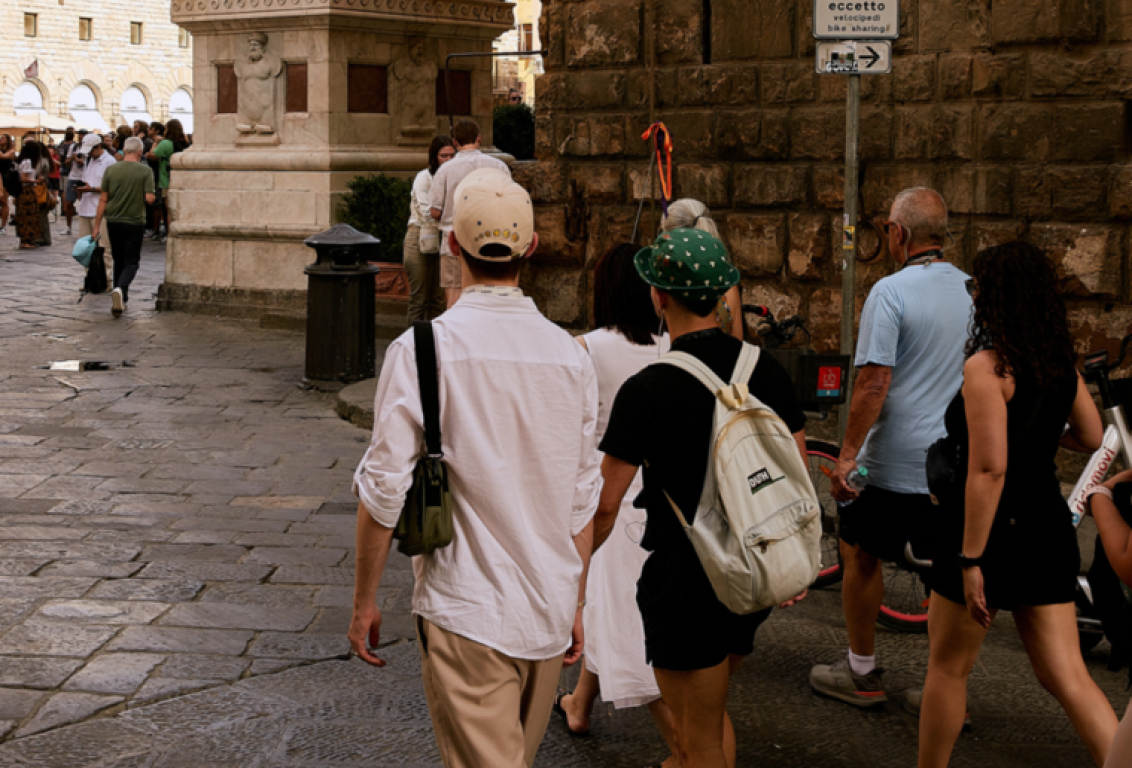

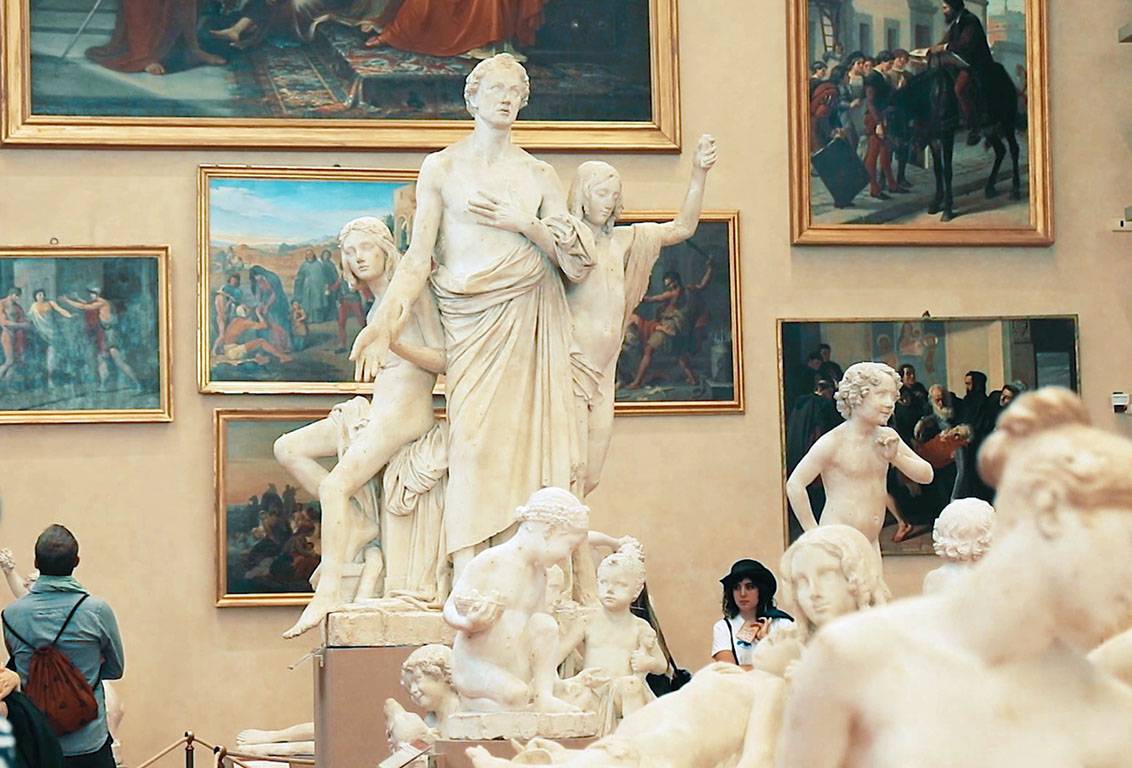
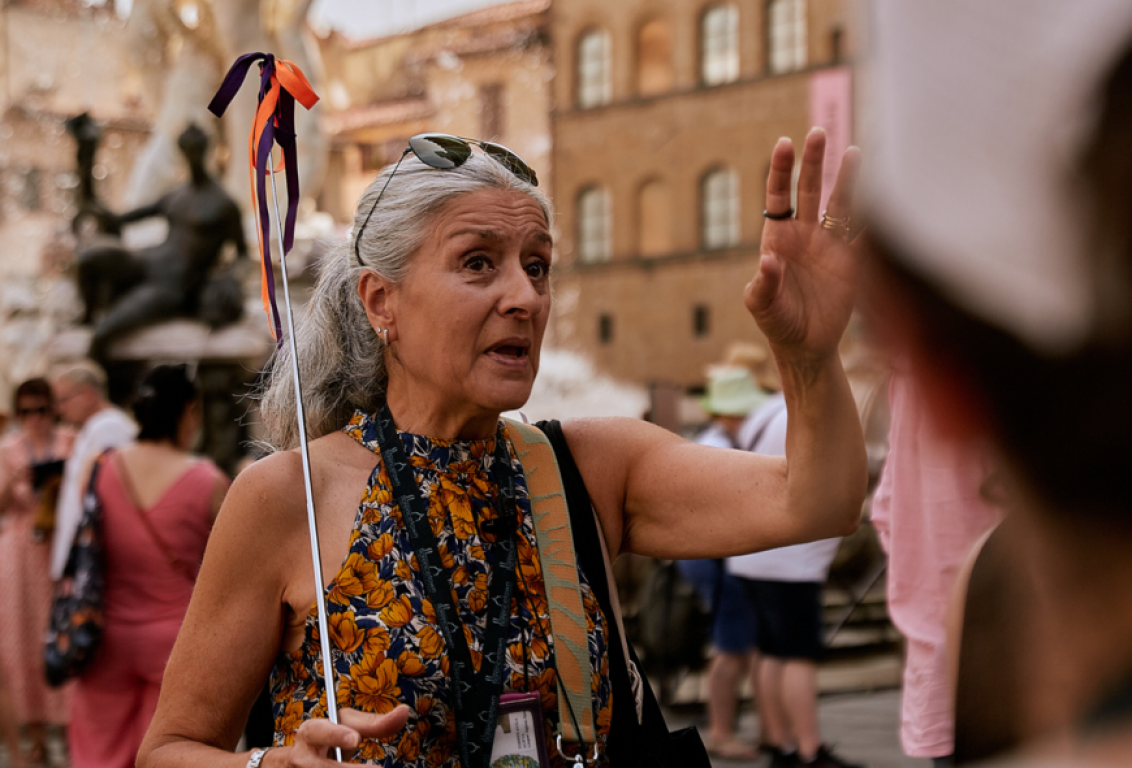
- Discover Florence and its renowned museums!
- Our Florence tours are only in English for the highest quality
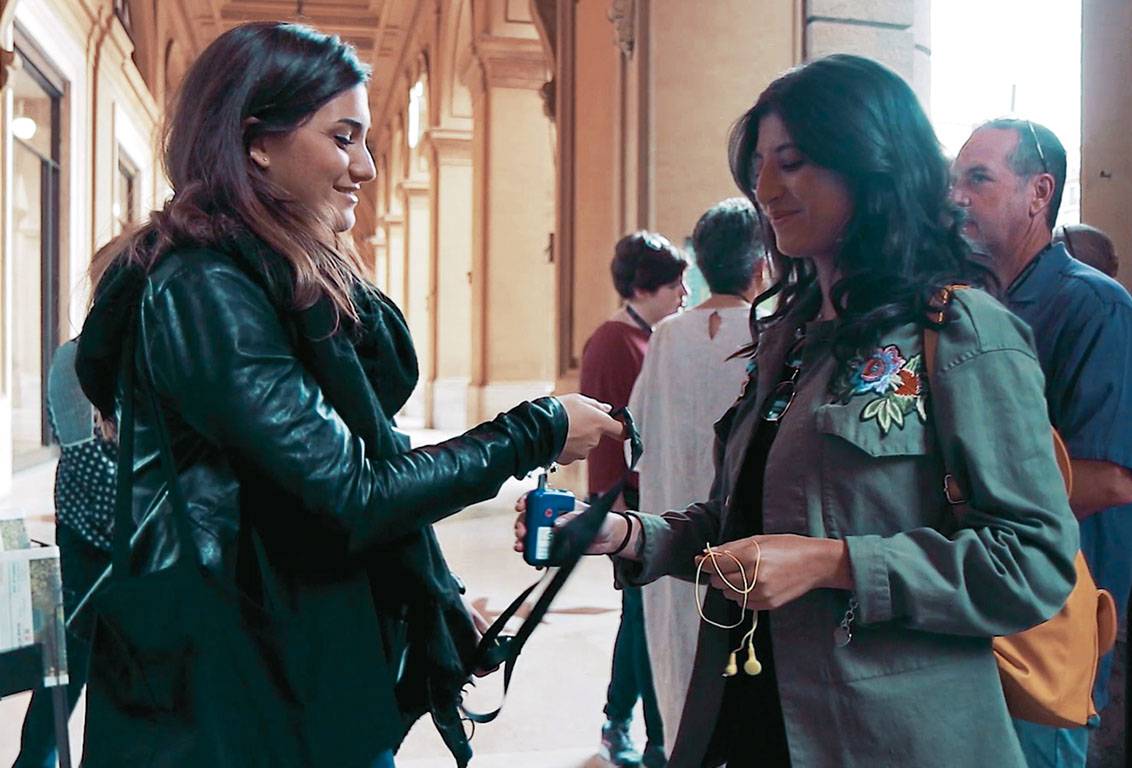
- Licensed and professional monolingual-speaking tour guide
- Florence introductory Walking tour
- Accademia Gallery entrance tickets
Meeting Point
For the departure that has a break between the activities - 9:30 AM, in English from May to October, the first meeting point is:
Accademia Gallery: via Ricasoli Accademia Ticket Office Via Ricasoli, 58/60, Florence. Look for Towns of Italy tour guide in front of civic number 58.
https://maps.app.goo.gl/zaNpGbRwSamsrHuv8
The second meeting point is via de Lamberti, please find the details below:
Florence - Via de Lamberti 1. Look for Towns of Italy tour guide, in front of civic number 1.
Want to share this experience just with your partner or your family?
Discover our Private Tour proposals.
Private upgrade
Why is Florence called the birthplace of the Renaissance?
Florence earned its title as the birthplace of the Renaissance through a unique convergence of wealth, patronage, intellectual culture, and artistic genius between the 14th and 16th centuries. The Medici banking dynasty - the wealthiest family in Europe - channeled extraordinary wealth into art, architecture, and humanist scholarship, commissioning masterworks from Brunelleschi, Donatello, Botticelli, and Michelangelo. Florence's merchant class was unusually educated, creating a civic culture that valued artistic excellence as an expression of civic pride. Philosophically, Florence was the center of the revival of classical Greek and Roman thought - Platonic philosophy, ancient literature, and Roman architecture were all rediscovered and reimagined here. The artistic innovations that defined the Renaissance — linear perspective, anatomical realism, psychological portraiture — all emerged first in Florence. Walking through the city's historic center with a Florencetown guide is a direct encounter with the streets and buildings where this cultural revolution happened.
What is Michelangelo's David made of, and how long did it take to sculpt?
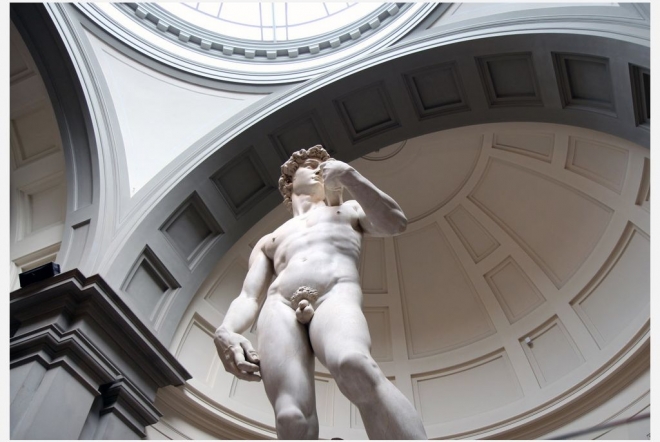
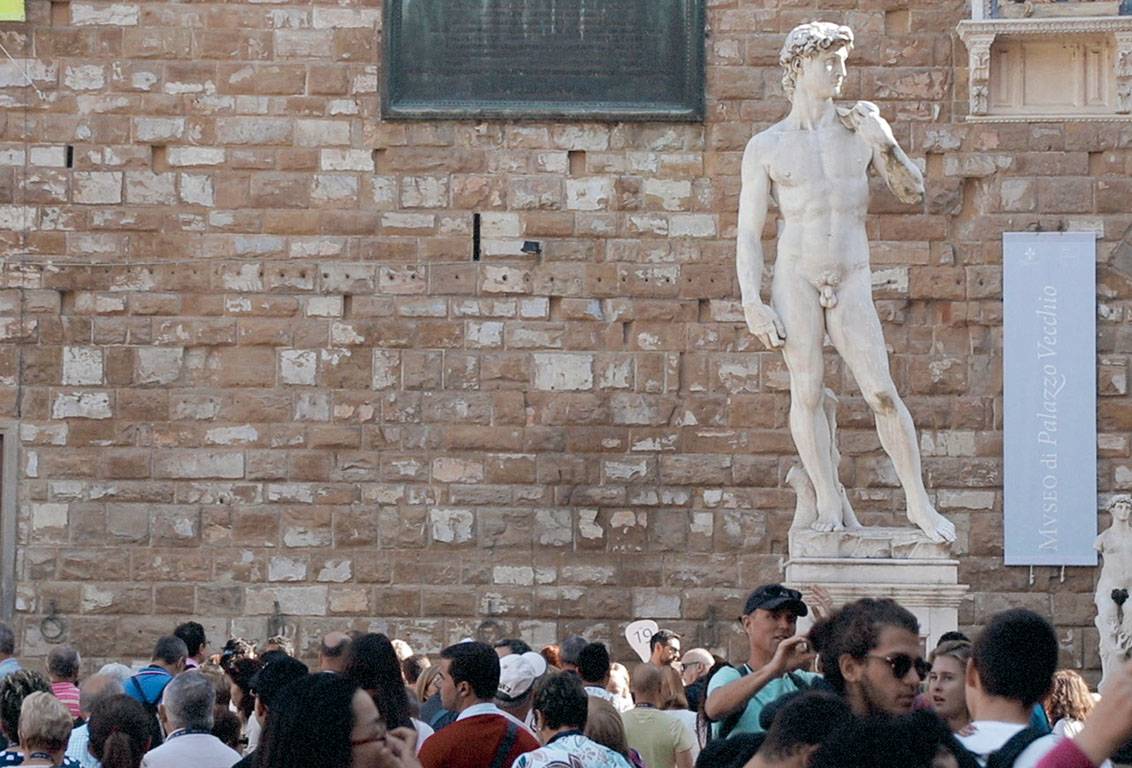
Michelangelo's David is carved from a single block of Carrara marble — the white, fine-grained stone from the Apuan Alps in northern Tuscany, the preferred medium of Renaissance sculptors. The block had a fascinating history before Michelangelo: quarried in 1464, it was partially roughed out by sculptor Agostino di Duccio, then abandoned for 35 years because it was considered too narrow, too tall, and damaged by the earlier attempts. In 1501, the young Michelangelo was commissioned to work with this seemingly unusable block and over approximately two years and three months he carved it into the world's most celebrated sculpture. The entire figure — at 5.17 meters tall — was extracted from this single piece of marble. The completed David was unveiled in Florence's Piazza della Signoria in 1504.
What is the Loggia dei Lanzi in Florence?
The Loggia dei Lanzi is a stunning open-air sculpture gallery on the corner of Piazza della Signoria, adjacent to the Palazzo Vecchio. Built between 1376 and 1382 as a platform for civic ceremonies, it became home to some of Florence's most remarkable outdoor sculptures. Its most famous works include Benvenuto Cellini's Perseus Holding the Head of Medusa (1554) — a bronze masterpiece of extraordinary detail — and Giambologna's Rape of the Sabine Women (1583), the largest marble group carved from a single block since antiquity. The Loggia is free, always open, and one of the highlights of Piazza della Signoria — a key stop on the Florencetown walking tour.
What is the Baptistery of San Giovanni in Florence, and why is it famous?
The Battistero di San Giovanni is one of the oldest and most sacred buildings in Florence, located directly in front of the Cathedral in Piazza del Duomo. Dating in its current form to the 11th-12th centuries, it served for centuries as the baptistery of Florence — the building where all Florentines, including Dante and Michelangelo, were baptised. It is world-famous for its three sets of bronze doors: the south doors by Andrea Pisano (1336), the north doors by Lorenzo Ghiberti (1403-1424), and most celebrated of all, Ghiberti's east doors, which Michelangelo called 'worthy of being the Gates of Paradise.' The interior ceiling mosaic of the Last Judgment is also one of the most spectacular medieval artworks in Italy. The Florencetown walking tour visits the Baptistery and explains its extraordinary history in context.
What are the most important things to see in Florence Italy for a first-time visitor?
For a first visit to Florence, the essential experiences include: Michelangelo's David at the Galleria dell'Accademia (book skip-the-line tickets in advance); the Uffizi Gallery for the world's greatest collection of Renaissance painting — Botticelli, Leonardo, Raphael, Caravaggio; the Florence Cathedral (Duomo) and the climb to Brunelleschi's dome (advance booking essential); the Baptistery of San Giovanni and Ghiberti's Gates of Paradise; Piazza della Signoria with the Palazzo Vecchio and the open-air Loggia dei Lanzi sculpture gallery; and the Ponte Vecchio at dusk. Beyond the main sights, the Oltrarno neighborhood, a market lunch at the Mercato Centrale, and an aperitivo along the Arno are quintessentially Florentine experiences not to miss. The Florencetown Florence Walking Tour with Michelangelo's David is designed as the perfect first-day introduction, combining the city's key outdoor landmarks with a skip-the-line Accademia visit.
CANCELLATION POLICY 24 HOURS
Cancellations are free up to 24 hours before the tour departure. For cancellations made within 24 hours of the tour start time, as well as in case of no-shows, the full amount will be charged.


Starting from
price per person